Principles of the ICPD
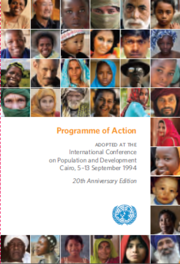
The ICPD Programme of Action, adopted in 1994 by 179 Member States, lays out a far-sighted plan for advancing human well-being that places the human rights of individuals, rather than numerical population targets, at the centre of the global development agenda.
It emphasizes the value of investing in women and girls, both as an end in itself and as a key to improving the quality of life for everyone. And it affirms the importance of sexual and reproductive health, including family planning, as a precondition for women’s empowerment. It calls for an end to gender-based violence and harmful traditional practices, including female genital mutilation.
Further, the Programme of Action highlights the crucial links between sexual and reproductive health and rights with almost every aspect of population and development, from urbanization, migration and ageing to changing family structures and the importance of addressing the rights of young people. It calls attention to the ways in which investing in women and youth, especially in their sexual and reproductive health, can impact environmental sustainability and population dynamics.
UNFPA generates annual assessments of the levels of national resources and international assistance required for implementation of the Programme of Action, which governments agreed to make available. Initially considered to have a 20-year time horizon, the Programme of Action was extended beyond 2014 by the General Assembly.
Sustainable Development
In 2015, world leaders unanimously adopted the Sustainable Development Goals, a historic set of goals to eliminate poverty, achieve gender equality, and secure the health and well-being of all people. The 17 global goals, also called Agenda 2030, call for collective effort across a wide range of areas – including environmental action, public health, human rights, education, and much more – to usher in a new era of development around the world.
At the 2019 Commission on Population and Development, government representatives agreed that the principles of the ICPD Programme of Action are essential to achieving the Sustainable Development Goals. The Nairobi Summit on ICPD25, taking place in November, will seek additional commitments from governments, organizations, advocates and others, to accelerate efforts to realize the goals of the Programme of Action at last.