UNFPA - State of World Population Reports

State of World Population Reports


youth_swp_sm.jpg

At the Frontier

Young People and Climate Change

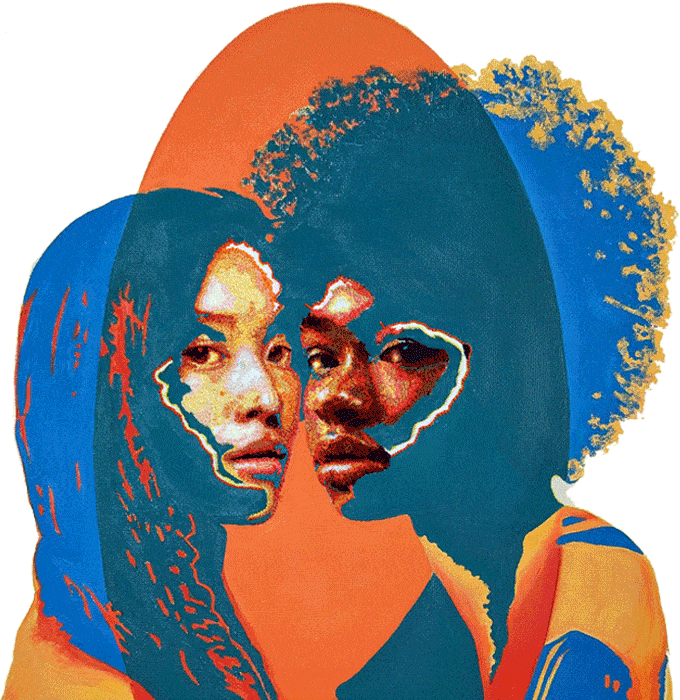
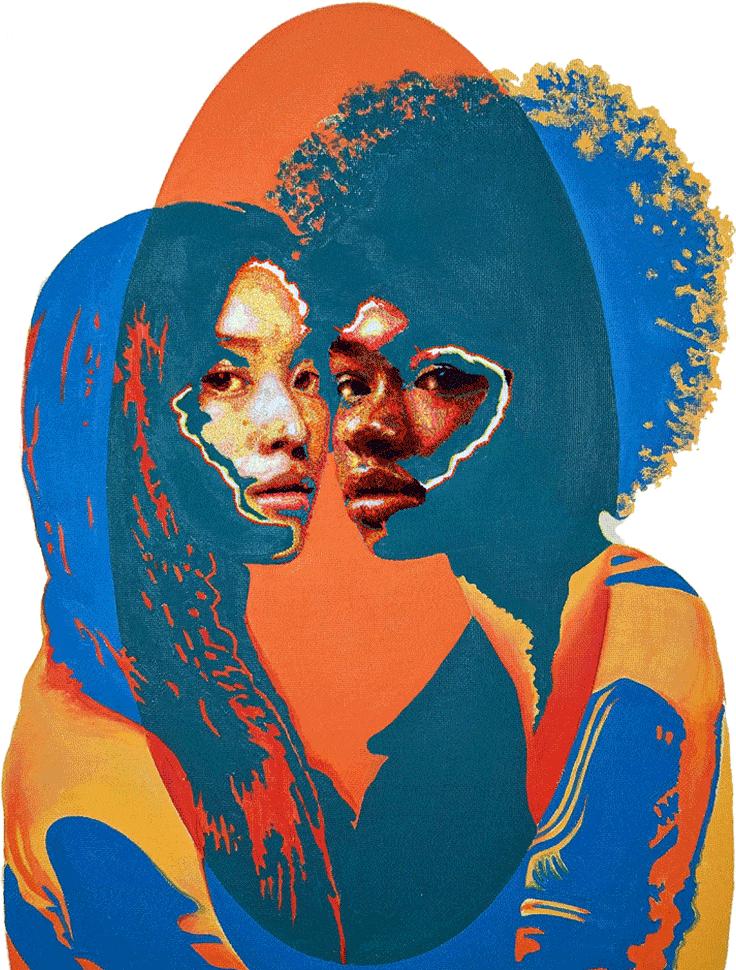
This youth supplement to UNFPA's flagship State of the World Population Report addresses climate change through the perspectives and experiences of seven young people (from Brazil, Marshall Islands, Morocco, Niger, Nigeria, Philippines and U.S.A.). It explores how environmental changes are affecting their lives, and what further climatic changes could mean for young people's lives, livelihoods, health, rights and development.
full review

Visite on line
swp09_sm.jpg

State of World Population 2009

Facing a Changing World: Women, Population and Climate

This year's flagship report argues that reproductive health care, including family planning, and gender relations could influence the future course of climate change and affect how humanity adapts to rising seas, worsening storms and severe droughts. Women, especially impoverished women in developing countries, bear the disproportionate burden of climate change, but have so far been largely overlooked in the debate about how to address problems of rising seas, droughts, melting glaciers and extreme weather, the report concludes.
full review

Visite on line
swp_youth_08_sm.gif

Generation of Change: Young People and Culture

Youth Supplement: State of World Population 2008

This Youth Supplement to UNFPA's State of the World Population 2008 focuses on the interactions among culture, gender and human rights and the critical importance of culturally sensitive approaches for effective development policies and programmes. The report, which is the third in a series, addresses culture as it shapes and nurtures the lives of young people and shows how young people develop their own subcultures, which are often different from and may conflict with the dominant culture. The youth report points out the value to young people of protecting the culture in which they grew up, but it also speaks on behalf of their right to embrace their own cultures in their own ways.  
full review

Visite on line
Download PDF
swp08_eng01sm.gif

State of World Population 2008

Reaching Common Ground: Culture, Gender and Human Rights

Culture is and always has been central to development. As a natural and fundamental dimension of people's lives, culture must be integrated into development policy and programming. This report shows how this process works in practice. The starting point of the report is the universal validity of the international human rights framework. The focus is therefore on discussing and showcasing how culturally sensitive approaches are critical for the realization of human rights in general and women's rights in particular.
full review

Visite on line
Download PDF
swp2007_sm.gif

State of World Population 2007

Unleashing the Potential of Urban Growth

In 2008, for the first time, more than half of the world’s population will be living in urban areas. By 2030, towns and cities will be home to almost 5 billion people. The urban population of Africa and Asia will double in less than a generation. This unprecedented shift could enhance development and promote sustainability—or it could deepen poverty and accelerate environmental degradation.
full review

Visite on line
swp2007_youth_sm.jpg

Growing Up Urban

State of World Population 2007: Youth Supplement

This is the second edition of the Youth Supplement to UNFPA’s State of World Population. The 2007 report focuses on urbanization; the Youth Supplement addresses the challenges and promises of urbanization as they affect young people.
full review

Visite on line
Download PDF
sowp06-en001_sm.gif

State of World Population 2006

A Passage to Hope: Women and International Migration

Today, half of all international migrants—95 million—are women and girls. Yet, despite substantial contributions to both their families at home and communities abroad, the needs of migrant women continue to be overlooked and ignored. The State of World Population 2006 report, A Passage to Hope: Women and International Migration, examines the scope and breadth of female migration, the impact of the funds they send home to support families and communities, and their disproportionate vulnerability to trafficking, exploitation and abuse.
full review

Visite on line
swp05_eng01sm.gif

State of World Population 2005

The Promise of Equality: Gender Equity, Reproductive Health and the Millennium Development Goals

How do we improve the lives of the nearly 3 billion individuals living on less than two dollars a day? How can we enable all individuals — male and female, young and old — to protect themselves from HIV? To save the lives of more than 500,000 women who die each year in childbirth? What will it take to show young people living in poverty that they have a stake in development and a hope for the future? For perhaps the first time in history, questions such as these are not simply rhetorical. They have answers: answers that go to the very heart of what it means to be a woman or a man, wealthy or poor.
full review

Visite on line
swp04_sm.jpg

State of World Population 2004

The Cairo Consensus at Ten: Population, Reproductive Health and The Global Effort to End Poverty

Countries are making real progress in carrying out a bold global action plan that links poverty alleviation to women's rights and universal access to reproductive health. Ten years into the new era opened by the 1994 International Conference on Population and Development (ICPD) in Cairo, the quality and reach of family planning programmes have improved, safe motherhood and HIV prevention efforts are being scaled up, and governments embrace the ICPD Programme of Action as an essential blueprint for realizing development goals.
full review

Visite on line
Download PDF
swp03_engSM.jpg

State of World Population 2003

Making 1 Billion Count: Investing in Adolescents' Health and Rights

Some 1.2 billion people--one person in five--are between ages 10 and 19, the largest number of adolescents in history. Half of them are poor; one in four live in extreme poverty, on less than $1 a day. This year's State of the World Population report examines their condition, in the context of changing social norms and lifestyles, including weakening of family support systems, amid globalization and urbanization.
full review

Download PDF