UNFPA, the United Nations Population Fund
EspanolEspanolFrancaisFrancaisArabicArabic
Search UNFPA web site
UNFPA Home How You Can Help UNFPA UNFPA Site MapRegister/Login to UNFPA UNFPA Website Help
About UNFPAPopulation IssuesUNFPA WorldwideLatest NewsState of World PopulationICPD and MDG FollowupPublications
HOME: ICPD & MDG FOLLOWUP: Millennium Development Goals (MDGs)
UNFPA and International Agreements
MDG Basics
MDGs and ICPD
MDGs and Reproductive Health
Questions and Answers
Findings from the Millennium Project
ICPD Programme of Action Summary
ICPD Programme of Action
ICPD+5
ICPD at 10
Key Documents, Publications and Links

About the Millennium Development Goals

The Millennium Development Goals focus the efforts of the world community on achieving significant, measurable improvements in people's lives. They establish yardsticks for measuring results, not just for developing countries but for rich countries that help to fund development programs and for the multilateral institutions that help countries implement them.

The first seven goals are mutually reinforcing and are directed at reducing poverty in all its forms. The last goal -- global partnership for development -- is about the means to achieve the first seven.

The list of goals, targets and indicators presented below is the new official MDG Framework incorporating four additional targets and related indicators and other indicator improvements adopted at the 62nd General Assembly of the United Nations in 2007.

MDG Targets and Indicators

   
Goals and targets

Indicators


Goal 1 Eradicate extreme poverty and hunger
     
  Halve, between 1990 and 2015, the proportion of people whose income is less than $1 a day
  • Proportion of population below $1 (PPP) per day
  • Poverty gap ratio (incidence x depth of poverty)
  • Share of poorest quintile in national income or consumption
 

Achieve full and productive employment and decent work for all, including women and young people

  • Growth rate of GDP per person employed
  • Employment-to-population ratio
  • Proportion of employed people living below $1 (PPP) per day
  • Proportion of own-account and contributing family workers in total employment
 

Halve, between 1990 and 2015, the proportion of people who suffer from hunger


  • Prevalence of underweight in children under five years of age
  • Proportion of population below minimum level of dietary energy consumption

Goal 2 Achieve universal primary education
     
  Ensure that, by 2015, children everywhere, boys and girls alike, will be able to complete a full course of primary schooling
  • Net enrolment ratio in primary education
  • Proportion of pupils starting grade 1 who reach last grade of primary school
  • Literacy rate of 15 to 24-year-olds, women and men

Goal 3 Promote gender equality and empower women
     
  Eliminate gender disparity in primary and secondary education preferably by 2005 and in all levels of education no later than 2015
  • Ratio of girls to boys in primary, secondary, and tertiary education
  • Share of women in wage employment in the nonagricultural sector
  • Proportion of seats held by women in national parliament

Goal 4 Reduce child mortality
     
  Reduce by two thirds, between 1990 and 2015, the under-five mortality rate
  • Under-five mortality rate
  • Infant mortality rate
  • Proportion of one-year-old children immunized against measles

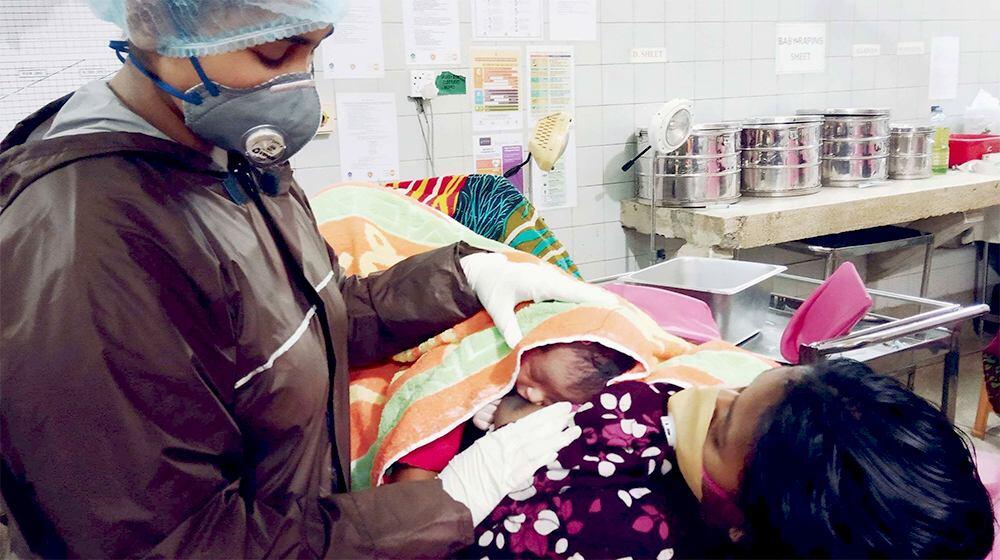
Goal 5 Improve maternal health
     
  Reduce by three quarters, between 1990 and 2015, the maternal mortality ratio
  • Maternal mortality ratio
  • Proportion of births attended by skilled health personnel
 

Achieve, by 2015, universal access to reproductive health

  • Contraceptive prevalence rate
  • Adolescent birth rate
  • Antenatal care coverage (at least one visit and at least four visits)
  • Unmet need for family planning

Goal 6 Combat HIV/AIDS, malaria and other diseases


Have halted by 2015 and begun to reverse the spread of HIV/AIDS

  • HIV prevalence among population aged 15-24 years
  • Condom use at last high-risk sex
  • Proportion of population aged 15-24 years with comprehensive correct knowledge of HIV/AIDS
  • Ratio of school attendance of orphans to school attendance of non-orphans aged 10-14 years
 

Achieve, by 2010, universal access to treatment for HIV/AIDS for all those who need it

  • Proportion of population with advanced HIV infection with access to antiretroviral drugs


Have halted by 2015 and begun to reverse the incidence of malaria and other major diseases

  • Incidence and death rates associated with malaria
  • Proportion of children under 5 sleeping under insecticide-treated bed-nets
  • Proportion of children under 5 with fever who are treated with appropriate anti-malarial drugs
  • Incidence, prevalence and death rates associated with tuberculosis
  • Proportion of tuberculosis cases detected and cured under directly observed treatment short course

Goal 7 Ensure environmental sustainability
     
  Integrate the principles of sustainable development into country policies and program and reverse the loss of environmental resources
  • Proportion of land area covered by forest
  • Carbon dioxide emissions, total, per capita and per $1 GDP (PPP)
  • Consumption of ozone-depleting substances
  • Proportion of fish stocks within safe biological limits
  • Proportion of total water resources used
 

Reduce biodiversity loss, achieving, by 2010, a significant reduction in the rate of loss

  • Proportion of terrestrial and marine areas protected
  • Proportion of species threatened with extinction
 

Halve, by 2015, the proportion of people without sustainable access to safe drinking water and basic sanitation

  • Proportion of population using an improved drinking water source
  • Proportion of population using an improved sanitation facility
 

By 2020, to have achieved a significant improvement in the lives of at least 100 million slum dwellers

  • Proportion of urban population living in slums


Goal 8

Develop a global partnership for development 1


NOTE:
The first four targets in Goal 8 share the first 12 indicators.


Develop further an open, rule-based, predictable, nondiscriminatory trading and financial system (includes a commitment to good governance, development, and poverty reduction—both nationally and internationally)

       Official development assistance
  • Net ODA, total and to the least developed countries, as percentage of OECD/DAC donors’ gross national income
  • Proportion of total bilateral, sector-allocable ODA of OECD/DAC donors to basic social services (basic education, primary health care, nutrition, safe water and sanitation)
  • Proportion of bilateral official development assistance of OECD/DAC donors that is untied
  • ODA received in landlocked developing countries as a proportion of their gross national incomes
  • ODA received in small island developing States as a proportion of their gross national incomes
      Market access
  • Proportion of total developed country imports (by value and excluding arms) from developing countries and least developed countries, admitted free of duty
  • Average tariffs imposed by developed countries on agricultural products and textiles and clothing from developing countries
  • Agricultural support estimate for OECD countries as a percentage of their gross domestic product
  • Proportion of ODA provided to help build trade capacity
       Debt sustainability
  • Total number of countries that have reached their HIPC decision points and number that have reached their HIPC completion points (cumulative)
  • Debt relief committed under HIPC and MDRI Initiative
  • Debt service as a percentage of exports of goods and services


Address the special needs of the least developed countries (includes tariff-and quota-free access for exports enhanced program of debt relief for heaviy indebted poor countries (HICP) and cancellation of official bilateral debt, and more generous ODA for countries committed to poverty reduction)


Address the special needs of landlocked developing countries and small island developing states (through the Programme of Action for the Sustainable Development of Small Island Developing States and the outcome of the 22nd special session of the General Assembly)


Deal comprehensively with the debt problems of developing countries through national and international measures in order to make debt sustainable in the long term


In cooperation with pharmaceutical companies, provide access to affordable, essential drugs in developing countries

  • Proportion of population with access to affordable, essential drugs on a sustainable basis


In cooperation with the private sector, make available the benefits of new technologies, especially information and communications

  • Telephone lines per 100 people
  • Personal computers per 100 people
  • Internet users per 100 people

  1. Some of the indicators listed below will be monitored separately for the least developed countries, Africa, landlocked countries, and small island developing states.


| Contact Us | Employment Opportunities |   Other UN Sites | Terms & Conditions | Fraud - Hotline |